Time of the Three Seas: A New Voice for Europe in the G20
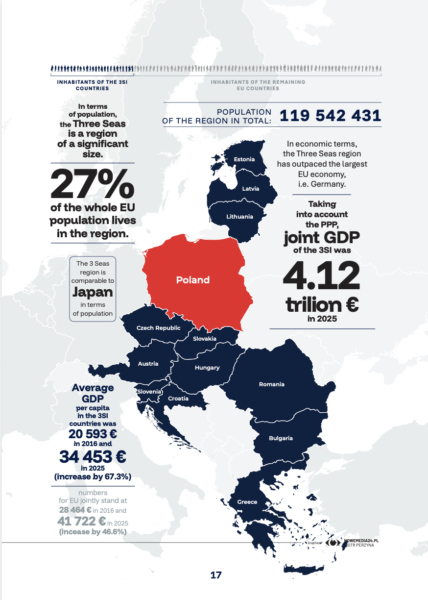
Over the past three decades, the countries of Central and Eastern Europe have undergone one of the largest and most successful transformations in modern history. Having made the transition from centrally planned economies to dynamic, innovation-driven market economies, the Three Seas region has emerged as one of the key engines of growth both within the European Union and beyond. Today, the region is home to as many as 120 million people, while its combined GDP has surpassed €4 trillion. This represents an economic scale comparable to that of the world’s largest economies.
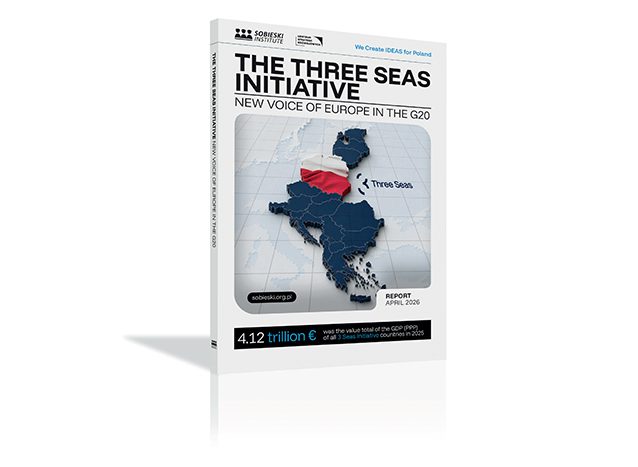
The latest report by the Sobieski Institute shows that the Three Seas Initiative is more than merely a platform for cooperation. It represents a macro-regional force built on the connectivity provided by infrastructure, energy and digital networks. It is an increasingly integrated space of economic convergence, industrial capacity and technological potential. The region’s growth dynamics, resilience to global disruptions and growing role in global value chains are making the Three Seas Initiative an increasingly important pillar of European competitiveness.
Poland’s invitation to participate in the G20 represents a historic turning point. For the first time, the voice of the Three Seas region can be heard directly in a forum where the rules of the global economy are shaped. This is a historic opportunity not only to strengthen regional cooperation, but above all to articulate the shared interests of the countries of the region on the global stage. The Three Seas Initiative is no longer merely an ambitious vision for closing the development gap. It is a reality—an increasingly influential force helping to shape the future of Europe and the global economy.
This document presents an analysis intended to serve all the countries of the region, focusing on four key areas:
1. The economic potential of the Three Seas Initiative – its scale, dynamics and structure, as well as the role of human capital and innovation;
2. The history of transformation and the significance of foreign investment – as a foundation for development and a source of economic resilience;
3. A new stage of development: the global expansion of companies from the region – including the identification of sectors in which the Three Seas Initiative holds competitive advantages;
4. The importance of the region’s representation on the international stage and the opportunities created by cooperation among the Three Seas countries in global forums, including in the context of Poland’s invitation to the G20 Summit in Miami.Methodologically, the report draws on two groups of sources. The first comprises the definitional and institutional documents of the Three Seas Initiative (3SI), including summit declarations, materials produced by the 3SI Research Center, official summit websites and information on the Three Seas Investment Fund (3SIIF). The second consists of statistical and benchmarking sources, including data from Eurostat, the IMF, the United Nations, the OECD, the European Commission, the World Bank and NATO. This distinction is necessary because the Three Seas Initiative does not have its own centralised data system. As noted by the 3SI Research Center, the absence of a permanent secretariat and headquarters has thus far hindered the systematic organisation of the Initiative’s documentation.
For centuries, Dubrovnik has been a centre of trade, diplomacy and the exchange of ideas. „O liepa, o draga, o slatka slobodo” – these words by the 16th-century poet Ivan Gundulić capture the meaning of freedom, understood as the freedom to act, exchange and create, which formed the foundation of the city’s development. Today, these same values underpin cooperation among the countries of the Three Seas Initiative, which are jointly building an open, stable and competitive region.
Together, we have built a region that is not only closing its development gap, but is also increasingly contributing to the shaping of global solutions. By acting together, we can further strengthen our position in the global economy while advancing the security, prosperity and sustainable growth of all Three Seas countries.
The report was authored by:
- Marcin Chludziński
- Jadwiga Emilewicz
- Przemysław Humięcki
- Aleksandra Lisicka-Firlej
- Leszek Skiba
- Radosław Żydok
We invite you to read the full report!